WHO IS HANDLING WHAT AT HOME
Family chores that do not live in one parent’s head
Book the dentist, return library books, take out the recycling or pack for a trip. When a task has a person and a due date, the household does not have to run on repeated reminders.
DIRECT ANSWER
How can you divide household chores between family members?
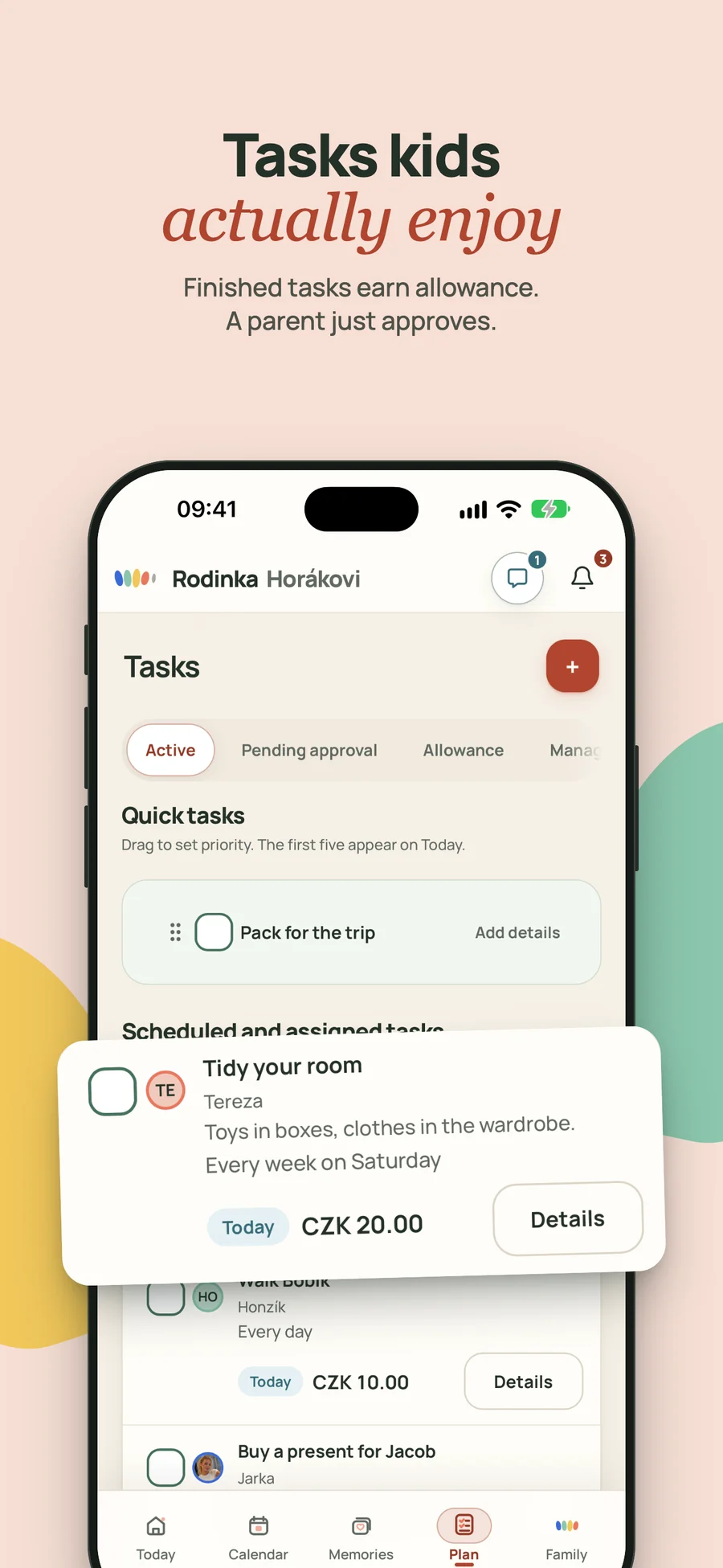
Start with specific responsibilities and give each one an owner and a realistic due date. Rodinka keeps that agreement visible to the household, so the list does not live only in one parent’s head. Children can take on simple chores that suit their age.
WHO IS HANDLING WHAT AT HOME
“We need to do that” is not an assigned chore
Housework often becomes visible only when it is not done. Planning work is even easier to miss: watching a camp deadline, buying a birthday gift or calling a repair service. If one person holds those details, they also carry most of the mental load.
A family task list is not a household performance score. It is a simple agreement about what needs doing, who has taken it and when it matters. Once complete, the task no longer needs another check-in message.
Small daily responsibilities
Recycling, dishes or packing a school bag can each have a short, clear definition of done.
Invisible organizing work
A doctor’s call, activity payment or gift purchase gets an owner and a due date.
Chores for children
A child can have their own sign-in showing only their chores. A chore can carry a reward or pocket money, and an adult confirms it is done.
Rodinka
How to divide household chores across the family
Rodinka turns loose household intentions into small, specific actions that everyone can see in the shared overview.
- 1
Name the outcome
Replace “sort out school” with “send the trip form”. A concrete task makes it obvious what completion means.
- 2
Choose a person and a date
Do not leave every task shared until the most attentive person does it. Agree on ownership while the need is clear.
- 3
Let repeating work repeat itself
Taking the bins out every Tuesday is set up once. A one-off note with no due date and a standing weekly duty are the same kind of task here.
- 4
Let completed work leave your head
Everyone can see that the chore is done, and where a reward is attached an adult confirms it and the amount is credited.
Questions about family chores and responsibilities
How can we divide household work fairly?
Include planning, calls and deadline tracking as well as visible cleaning. Then consider time and mental effort, not only the number of items each person has.
How should we give chores to children?
Choose something age-appropriate, specific and achievable by a clear time. The aim is participation and a habit of helping, not a perfect result.
How can we remind each other without arguing?
Agree on the owner and put the task in a shared place. A reminder then refers to the same visible agreement instead of one person managing the other.
How do rewards and pocket money work?
A chore can carry a reward and require an adult to approve it. The child ticks it off, a parent confirms, and the amount is credited. Regular pocket money can depend on the agreed chores being done.
Can a quick task be dictated?
On supported devices, yes — straight from the Today screen. You say what needs doing, Rodinka turns it into draft tasks and shows them for editing. Nothing is created until you confirm.