A SCHEDULE FOR THE WHOLE HOUSEHOLD
A shared family calendar that includes the practical details
When is the school concert, who is driving to swimming and is Saturday’s visit confirmed? A family calendar keeps the dates and the hand-offs together, so everyone can check for themselves.
DIRECT ANSWER
How can parents share a family calendar?
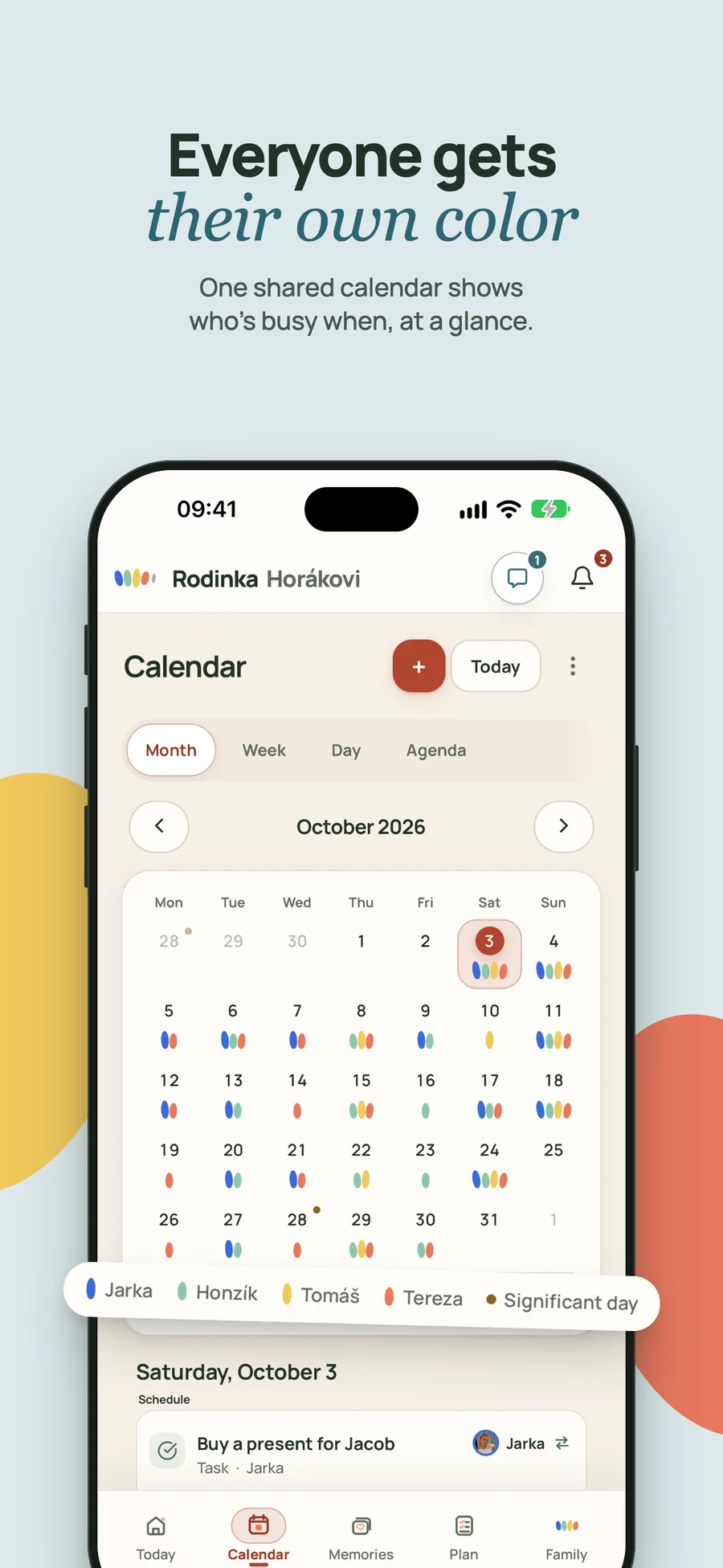
Parents use one shared family space in Rodinka and add events to the same calendar. An activity, appointment or trip can keep the date, participants and agreed transport together. Both parents see the change without copying it between separate calendars, and birthdays or anniversaries show up as a quiet layer that does not block time.
A SCHEDULE FOR THE WHOLE HOUSEHOLD
A date and time are often only half the plan
Family schedules are not just a list of appointments. Children’s activities also need a place, the right child and a clear adult handling transport. If half of that information remains in chat, the calendar cannot do its full job.
The shared view needs to work for a quick morning check and for planning the week ahead. Recurring activities are added once, exceptions are visible to everyone and nobody maintains a separate version of the family schedule.
Children’s activities
Swimming, music lessons and practice include the time, place, child and agreed transport.
School and appointments
Parent meetings, check-ups and days off no longer sit only in one parent’s inbox.
Weekends and visits
Birthdays and time with grandparents are visible before another plan is made.
Rodinka
How a shared family calendar works in Rodinka
Events live in the same family space, so every invited adult sees the current schedule instead of waiting for a screenshot or forwarded message.
- 1
Add the full event
Record the time, place and family member involved. Set regular activities to repeat so they do not need weekly re-entry.
- 2
Separate who it is about from who is handling it
An event shows the participant — the child going to swimming — separately from the adult driving them there. They are two different facts and Rodinka does not collapse them into one.
- 3
Review one family week
Switch between a month, a week or an agenda grouped by urgency. When either parent makes plans, both see the same family commitments.
- 4
Let the important days turn up on their own
Family birthdays, anniversaries and your own special days appear in the calendar as a quiet layer that does not block time, and Rodinka can remind you ahead of the ones that matter.
Questions families ask about shared calendars
How do parents share a family calendar?
Create one family space and invite the other adult. Put shared events there, and include the transport or pick-up detail whenever it affects the plan.
How can we organize children’s activities?
For every activity, record the day, time, place, child and transport. Repeat regular sessions and edit exceptions individually so the weekly view stays accurate.
What if someone else drives just one week?
Change the companion on that single occurrence. The repeating activity itself is untouched, so one exception does not mean breaking up the series or recreating it.
Should chores go in the family calendar?
Use an event for something that happens at a time. Preparation, such as buying a gift or returning a form, works better as a separate chore with an owner and due date.
Does the calendar warn about clashes?
Yes, when one family member would have two commitments at the same time — say an activity and a doctor’s appointment. Two children at two activities at once is not a clash as long as someone different takes each of them. The warning never stops you from saving.